CASHFLOW Quadrant: The Case for The Right Side
Sam Henry
Overview
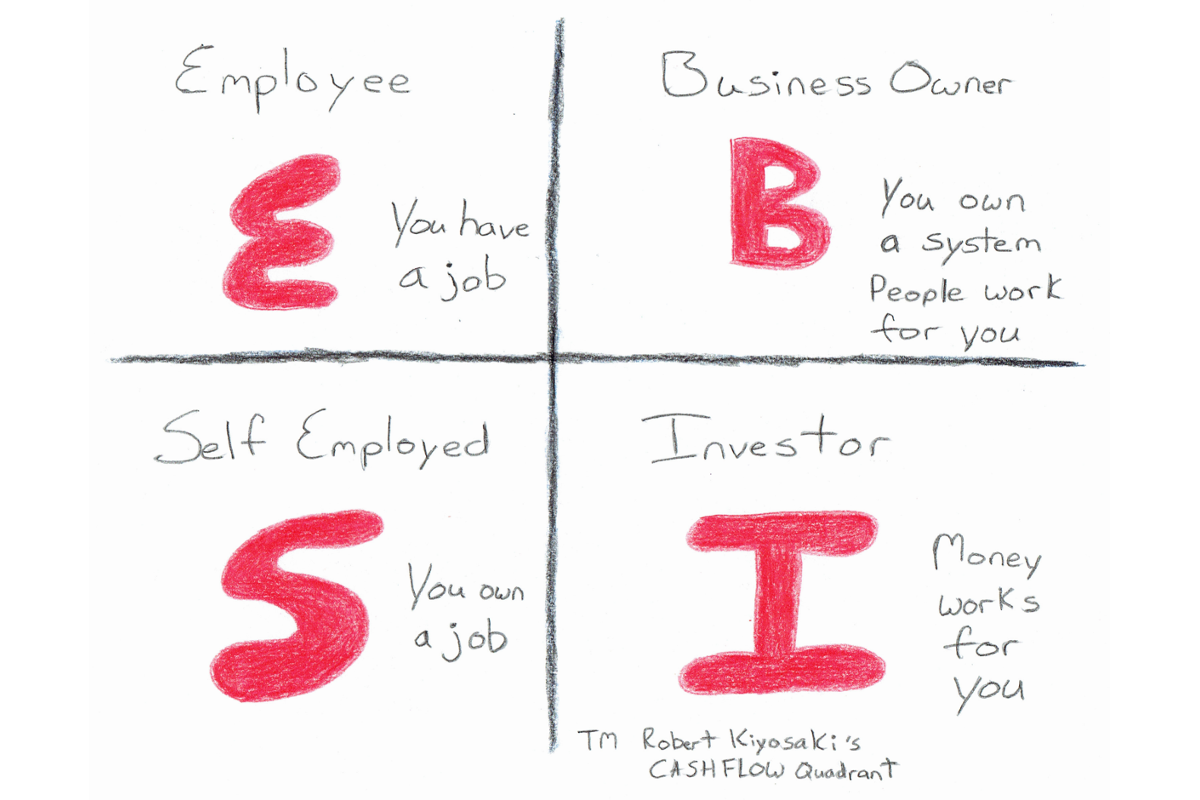
Robert Kiyosaki's CASHFLOW Quadrant framework categorizes earners into four groups: employees (E) and self-employed individuals (S) on the left side, and business owners (B) and investors (I) on the right side. This model illustrates different approaches to generating income and building wealth.
The Limitations of the Left Side
Left-side earners exchange time for compensation. Employees receive salaries and benefits from employers but remain dependent on job security. "If they lose the job, or the company goes out of business, they no longer earn money." Most employment positions have income ceilings regardless of performance.
Self-employed professionals maintain greater autonomy but face similar constraints. Their earnings capacity depends entirely on available working hours. According to Kiyosaki's framework, "employees have a job and the self-employed own a job."
The Advantages of the Right Side
Right-side participants generate income unbounded by time constraints. Business owners develop products and systems, then delegate work to employees, enabling unlimited scaling and revenue growth.
Investors purchase assets generating income, leveraging cash flow to acquire additional income-producing properties. This approach eliminates direct labor requirements while providing substantial tax advantages.
Multifamily real estate has emerged as a popular investment vehicle. As a limited partner in syndications, investors deploy capital into cash-flowing assets while managers handle operational responsibilities.
The Path Forward
"The 'B' and 'I' categories are the ones that can generate the long-term wealth" necessary for financial independence, despite unconventional status compared to traditional employment paths.
Sam Henry
Interested in Partnering with HD Multifamily?
We work with a select group of family offices, HNWIs, and institutional allocators. Introductory calls are available with our principals.
Schedule a Call